
Apple just hit a $4 trillion market cap as strong iPhone 17 sales drive a stock rally
The tech giant rode a fresh market surge to hit the milestone, amid strong early sales for its new iPhone model in the U.S. and China
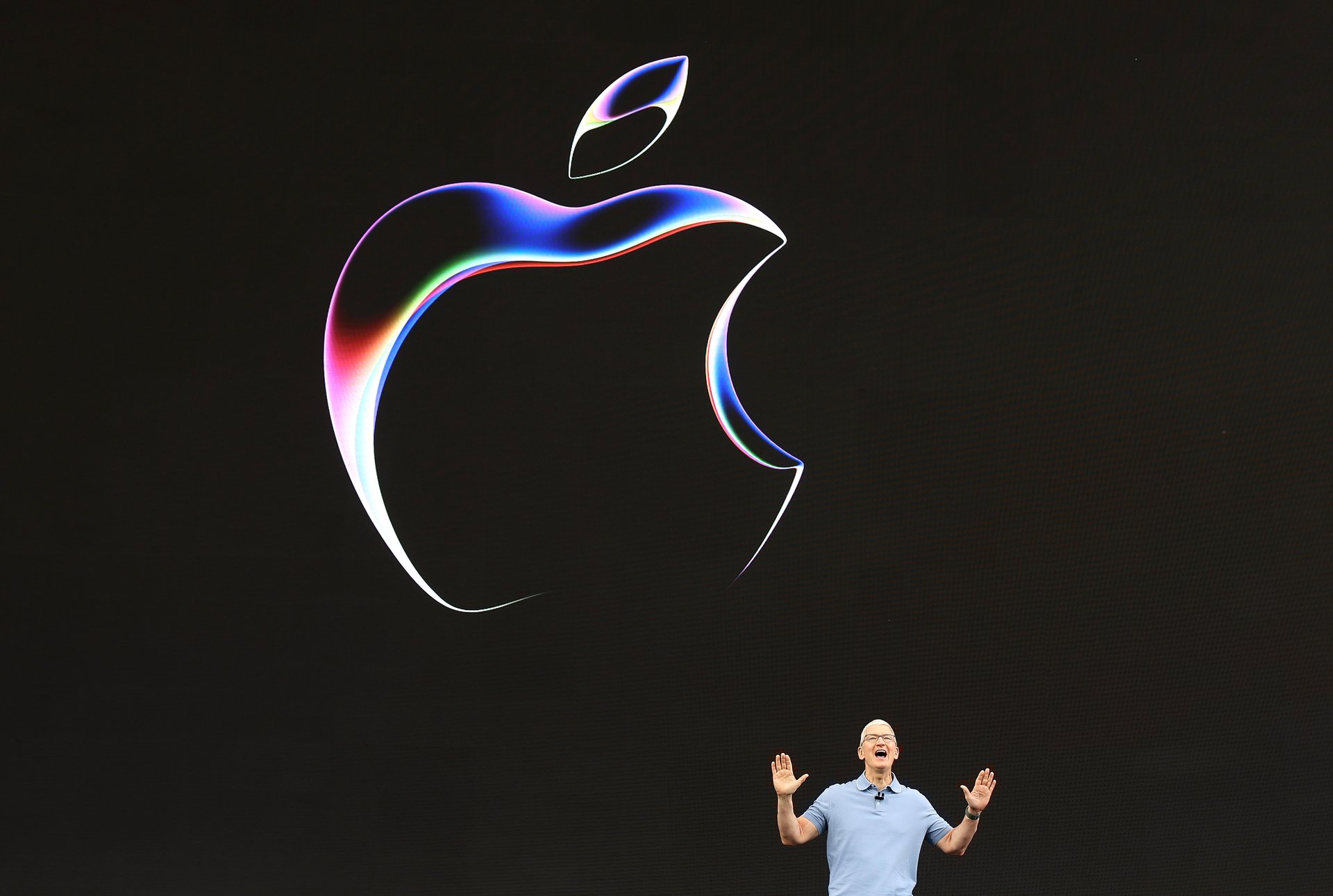
Justin Sullivan/Getty Images
Apple $AAPL’s valuation broke $4 trillion during intraday trading Tuesday, as the tech giant benefitted from a renewed stock market rally and investor optimism ahead of its earnings later this week.
The market rally comes as the U.S. and China appear to cool tensions, setting the scene for President Donald Trump and China President Xi Jinping to potentially strike a trade deal later this week. Markets were also looking ahead to the Federal Reserve's upcoming interest-rate decision on Wednesday, as well as a flurry of tech earnings, including Apple's on Thursday.
Related Content
Nvidia $NVDA has been the lone member of the $4 trillion market-cap club for some months. Apple joins it with shares up more than 9% this year, as investors price in a hotter iPhone cycle and more revenue from its services arm. Microsoft $MSFT also crossed the $4 trillion mark during intraday trading on Tuesday — a milestone it first touched in July.
Early iPhone 17 demand has been a driving factor for the stock in recent weeks. Counterpoint’s launch-window data showed sales in the U.S. and China running about 14% ahead of last year’s iPhone 16 earlier this month, with the base 17 nearly doubling in China. This cycle, Apple kept prices steady and added an ultra-thin, titanium-framed “iPhone Air”, which went on sale in China on Wednesday after a short delay.
Services, Apple's music, iCloud, app store, and streaming arm, has helped too. In the June quarter, Apple posted $94 billion in top-line revenue, up 10% year-over-year; the services division alone was responsible for a record $27.4 billion in revenue.
Arguably investors’ favorite tailwind, however, has been capital returns. In May, Apple’s board authorized another $100 billion in repurchases, less than last year’s record, but still a buyback that tightens the float and supports earnings per share.
Elsewhere, the company’s on-device AI features suite called Apple Intelligence is rolling out across iPhone, iPad, and Mac, giving the company a low-key, privacy-first angle on AI that’s designed to nudge upgrades without the cloud-spend arms race. The more Apple can tie everyday tasks to Apple-only AI, the sturdier the upgrade cycle becomes, analysts say.
There are still caveats, including tariff costs, regulatory concerns, and the underwhelming nature of the AI rollout that has been particularly cautious in China. But the driving force of services growth, iPhone demand, and disciplined cash returns remains, all of which will face fresh scrutiny with the company's earnings report on Thursday.