
Eric Schmidt says AI’s real limit isn’t chips — it’s electricity
Targeting superintelligence, tech giants are scrambling for nuclear deals and water rights to power AI advances
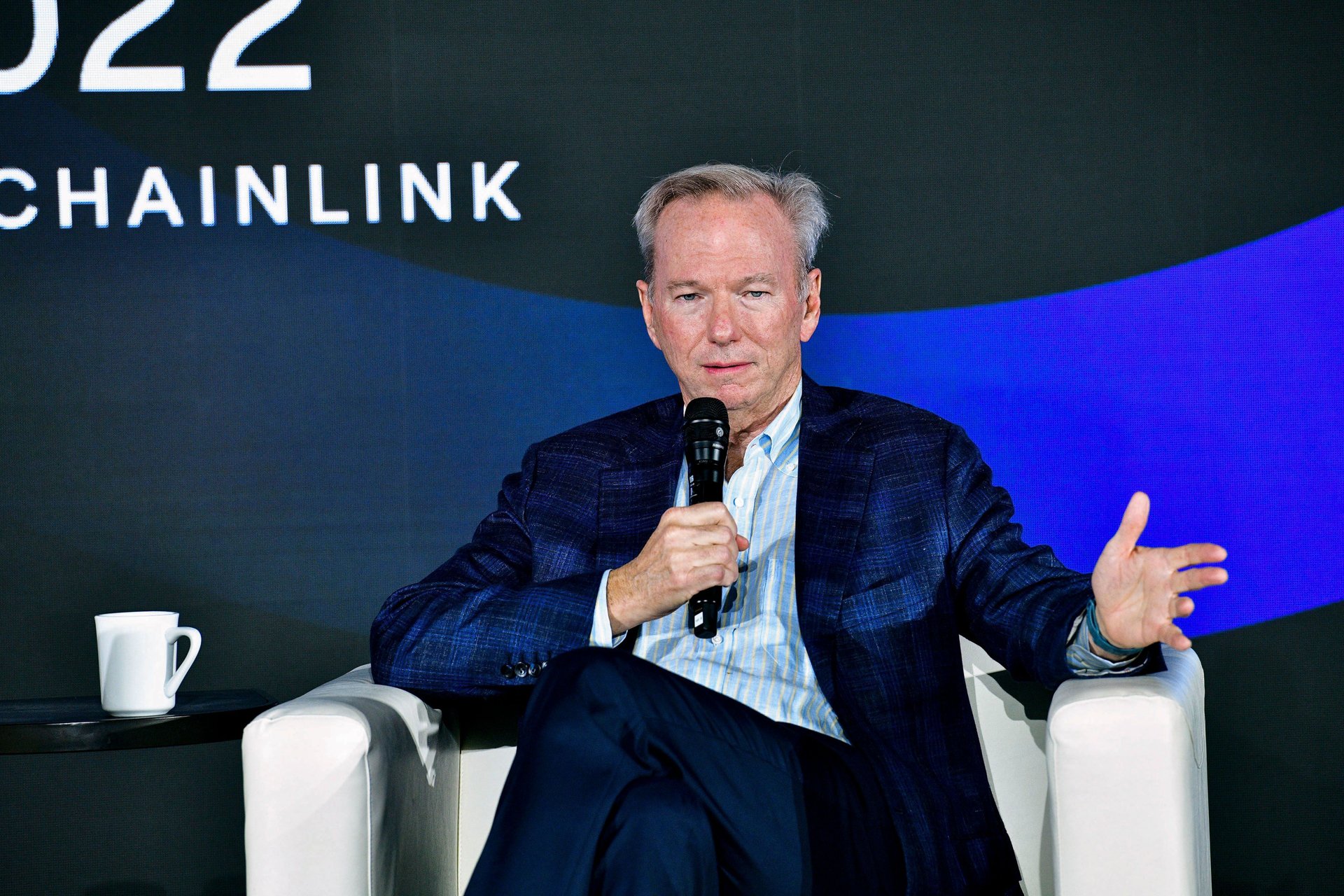
Photo by Eugene Gologursky/Getty Images for SmartContract
Artificial intelligence is already reshaping industries like finance and customer service, but Silicon Valley is setting its sights on something even bigger: superintelligence. This next evolution of AI, where companies aim to surpass the cognitive abilities of all humans combined, has not been realized. But it's still attracting billions of dollars in investments — and stoking a growing concern: energy scarcity.
In a new episode of the Moonshots podcast, former Google $GOOGL CEO Eric Schmidt said the real bottleneck to achieving artificial superintelligence isn’t computing power or funding. It’s electricity.
Related Content
“AI’s natural limit is electricity, not chips,” Schmidt said. “The U.S. is currently expected to need another 92 gigawatts of power to support the AI revolution.” That’s the equivalent of building roughly 92 new nuclear power stations, a tall order in a country that’s only built two in the last three decades.
The warning comes as tech giants like OpenAI, Meta $META, and Microsoft $MSFT race to build AI experts in fields such as law, medicine, engineering, and research. Schmidt predicts this could happen within five years.
The stakes are massive. As Wall Street piles into AI, drawn by its promise to automate tasks, boost productivity, and unlock new discoveries, superintelligence is seen as the ultimate prize. And the competition to reach it is fierce. Companies are now battling over top AI talent and securing massive energy contracts to stay ahead.
Microsoft, for example, has already signed a 20-year power purchase agreement with Constellation Energy to restart Three Mile Island, a nuclear plant shuttered in 2019, with a target relaunch in 2028. And its latest environmental report shows another cost of current AI use: a 34% jump in water consumption to cool servers and keep data centers running, totaling 1.7 billion gallons in a single year.
By 2027, researchers estimate AI workloads could consume up to 6.6 billion cubic meters of water, enough to supply all of Canada for over a year.
Even Sam Altman, CEO of OpenAI, has acknowledged the energy challenge. “An energy breakthrough is essential for AI’s future,” he said last year. Altman has personally invested in Helion, a nuclear fusion startup aiming to build a pilot plant by 2028.
Lawmakers are taking notice. In May, Microsoft and AMD urged Congress to fast-track permits for new energy projects to avoid overwhelming the U.S. power grid.
Still, the environmental toll is raising alarms among climate groups. Greenpeace has warned that, without serious planning, AI’s growth could derail national and global climate goals — which most nations are already failing to meet.
“We don’t know what AI will deliver, and we certainly don’t know what superintelligence will bring,” Schmidt said in a LinkedIn post promoting the podcast, “but we know that it is coming fast. We need to plan ahead to ensure we have the energy needed to meet the many opportunities and challenges that AI puts before us.”
In other words: It’s not enough to build the brains. We’ll need to power them, too.