
The FAA is reportedly considering changing commercial plane certifications. Here's what that could mean
The Federal Aviation Administration reportedly plans to make it faster and cheaper to certify new commercial planes
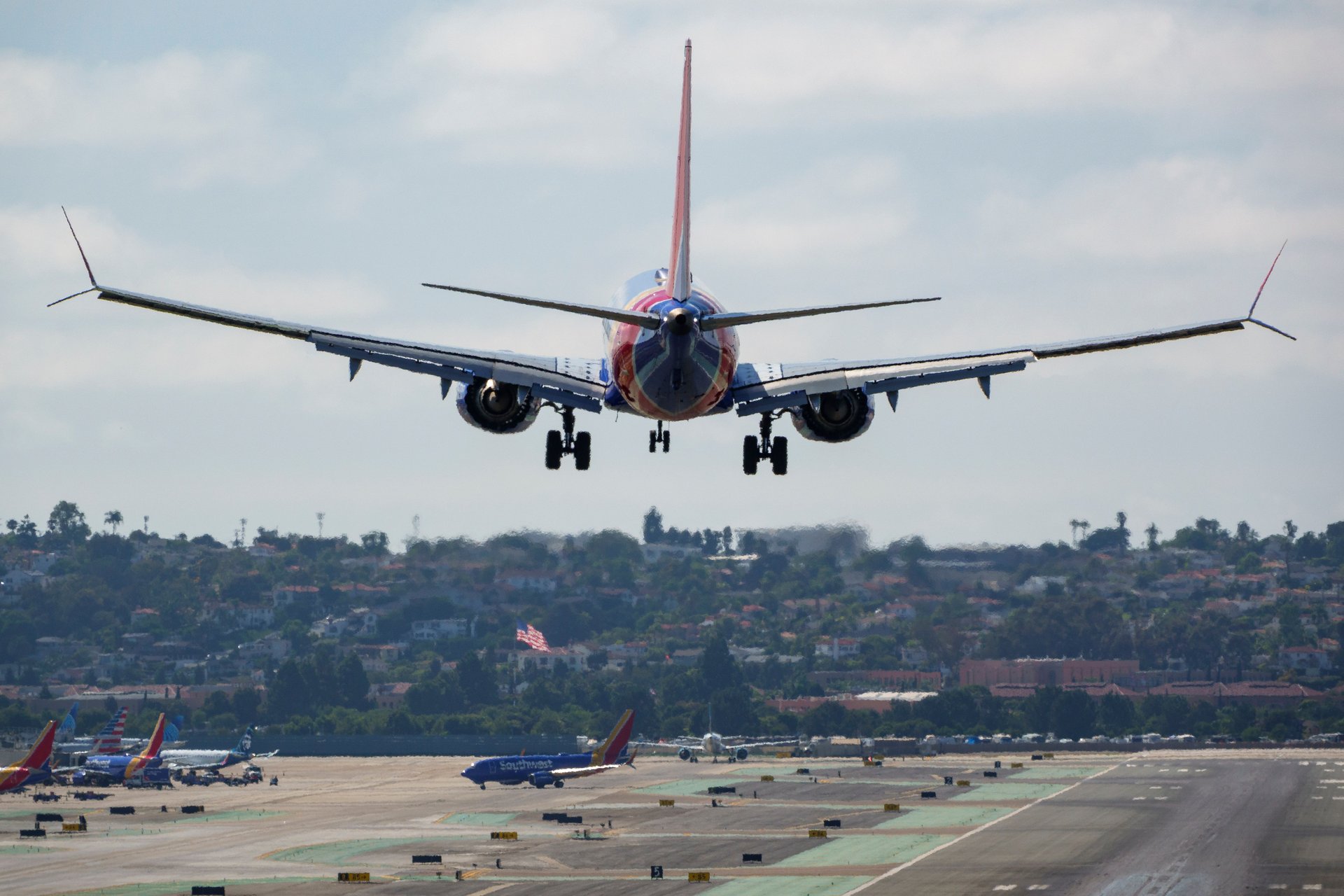
Kevin Carter/Getty Images
The Federal Aviation Administration reportedly plans to propose updates to the speed certification process for new commercial airplanes by December.
The FAA said the proposed changes intend to “modernize certain certification standards,” according to a Reuters report that cites a Thursday notice from the Trump administration.
Related Content
The aviation agency said the proposed modifications would be deregulatory and would include reducing the number of exemptions, special conditions, and safety findings needed in the certification process. The FAA said the changes would cut back on certification costs as well as the amount of time it takes to certify new and updated planes “while maintaining or increasing the level of safety," Reuters reported.
The FAA did not immediately respond to Quartz’s request for comment.
As the industry awaits these potential proposed changes, here’s what a possible modification to the certification process could mean.
How the modification process works
Before the FAA can change any current regulations, it has to follow a modification process based on the Administrative Procedures Act, which dictates how federal agencies create rules.
Ronnie Gipson, an associate professor at Penn State Dickinson Law with a background in aviation law, said that if the FAA wants to revise its rules or adopt new ones, it first must publish a notice of proposed rulemaking, which details the agency’s proposed language to current regulations.
He said that once that’s published, industry stakeholders — like aircraft manufacturers and local governments — will have a public comment period to weigh in. Once that period ends, the FAA will analyze those comments to determine how its final rule would impact the industry.
Comment periods can range between 45 to 60 days, depending on the significance of the rule change, according to the FAA.
“Since the Federal Aviation Administration's primary goal is safety, that's really what they'll be looking at,” Gipson said, adding that there’s “always modifications to what they proposed.”
Once this is all done, the FAA will publish a final rule with an effective date, he said.
However, Gipson alluded to the fact that this process isn’t always so straightforward.
Transportation Secretary Sean P. Duffy announced in July a new final FAA rule — called the Modernization of Special Airworthiness Certification, or MOSAIC — that in part reduced regulatory requirements, among other changes, within the light sport aviation sector.
Gipson said this project alone took 10 years to finalize.
“MOSAIC actually achieved a lot of the things that are in that announcement from Reuters, but focused on the general aviation side of aviation, the experimental and amateur built aircraft,” he added. “So MOSAIC really deregulated that part of the industry and that took 10 years.”
If the FAA wants to “go down this path” for another segment of aviation — like the commercial side — “I don’t think it’s something that’s going to occur overnight,” Gipson said, adding it will take “a lot of cooperation” between the FAA and industry stakeholders.
The certification process
The current FAA certification process includes a review of proposed designs, ground and flight tests, and an evaluation of the plane’s required maintenance, among other factors.
FAA regulations are already written to comply with standards from the International Civil Aviation Organization — a United Nations agency — Gipson said. However, the Reuters report said the agency plans to further “harmonize” FAA regulations with international standards.
There are three types of certifications an aircraft needs to be up and running, including a type certification (which approves the plane’s design), production certification (which lets the manufacturer duplicate the product), and an airworthiness certification (which means it can be operated safely).
Certifying an aircraft can take years to complete. A brand new aircraft design typically takes between five to nine years to certify. An amended certification, which is a version of type certification that approves a new design aspect of an already certified plane, normally takes between three to five years, according to the FAA.
Gipson said that the amended certification goes through the process “at a much faster pace” due to the fact that the FAA “is no longer looking at the aircraft from nose to tail.” It’s only checking out the proposed change.
Amended certification approval for two versions of Boeing $BA’s 737 plane, the Max 7 and 10, were pushed to 2026 as the aircraft maker continues to work on a solution to an issue in the engine’s anti-ice system, the Air Current reported.
Boeing had originally planned for the Max 7 to get certified in 2022, Business Insider reported. This puts the potential certification date four years later than initially planned.
In Boeing’s second quarter earnings call, CEO Kelly Ortberg said Boeing continues to “mature the technical solutions” for the engine anti-ice system, adding that it's “taking longer than expected.”
“We don't expect a material impact to our production plans, and we're prepared to build other 737 models for our customers,” he said.
Ortberg added that Boeing plans to ask the FAA to let it ramp up production to 42 planes a month after achieving a rate of 38 planes per month.
State of FAA under Trump
The FAA has dealt with some pretty big changes to its organization since President Donald Trump took office.
In January, President Trump announced the creation of the Department of Government Efficiency. DOGE — which was led by Elon Musk prior to his departure — aims to cut government spending.
In February, as part of DOGE’s efforts, more than 300 FAA employees were let go. The Trump administration said none of these roles pertained to “critical safety,” but a union representing 130 of the laid off workers said some of them included aviation safety assistants, among others, the Associated Press reported.
However, 132 of the laid off workers got their jobs back after a federal judge ruled the FAA had to reinstate them, Reuters reported.
“With the actions taken by the Department of Government Efficiency, there's been significant attrition at the Federal Aviation Administration,” Gipson said. “So maybe this is an initiative that corresponds or is as a consequence or result of that from the standpoint of, we need to be more efficient in this process because we have less people and going forward, we're going to need to operate with less people.”
Americans' fear of flying
Organizational changes at the FAA and a possible rule change come amidst a changing sentiment among flyers.
Flying is actually safer now than it has been in more than two decades as fatal accidents become less common, CNN reported. However, Americans have been growing weary of flying as crashes and near-accidents gain national attention.
In January, the U.S. saw its deadliest airplane crash in decades after a helicopter collided with an American Airlines commercial plane near Ronald Reagan Washington National Airport. The fatal crash had no survivors from among the 60 passengers, two pilots, two flight attendants, and three helicopter crew members.
Following the deadly crash, a Delta Air Lines commercial plane flipped upside down at Toronto Pearson International Airport in February. Although there were no fatalities, video footage of the upturned plane still left flyers feeling unsettled.
So far in 2025, there have been 765 non-fatal plane accidents and 168 fatal accidents, according to data from the National Transportation Safety Board, with the vast majority of them involving non-commercial flights.
Following both the Reagan and Toronto crashes, Delta CEO Ed Bastian said both are likely part of the reason airlines were seeing flyers pull back, CNN reported.
Gipson said that these crashes “create fear in the public about aviation in general,” adding that “the worst thing” the FAA could do would be to “engage in rulemaking that sort of feeds that fear.”
“I just don't think that the FAA is going to do that,” he said. “I think they're going to go the other way — that's the narrative you're going to hear around the proposed changes that this is going to make aviation safer, which should be the goal.”
What could these changes look like?
Gipson said “the real question here” is whether the FAA is looking to revise or remove regulations.
“If they're trying to remove regulations, that could pose a problem, especially from a safety standpoint,” he said, although noting that this is why the period of proposed rulemaking exists since “that's where those mistakes are actually caught.”
“Unfortunately we have this term where some of those regulations are written in blood,” Gipson said. “There's been a major aviation accident and a new regulation came into place to plug a hole. So that brings us to this point of, ‘oh, we want to streamline the process.’ That's fine, but…We want to make sure that we have those regulations that are written in blood. Those need to stay.
“Until we see exactly what's written into the document of proposed changes, we're all playing a little bit of a guessing game,” he said.