
Economists contradicted Trump on tariffs. A White House adviser wants them 'disciplined'
Kevin Hassett's remarks put a spotlight on the Trump administration's zeal to pummel researchers who publish findings that contradict their economic messaging
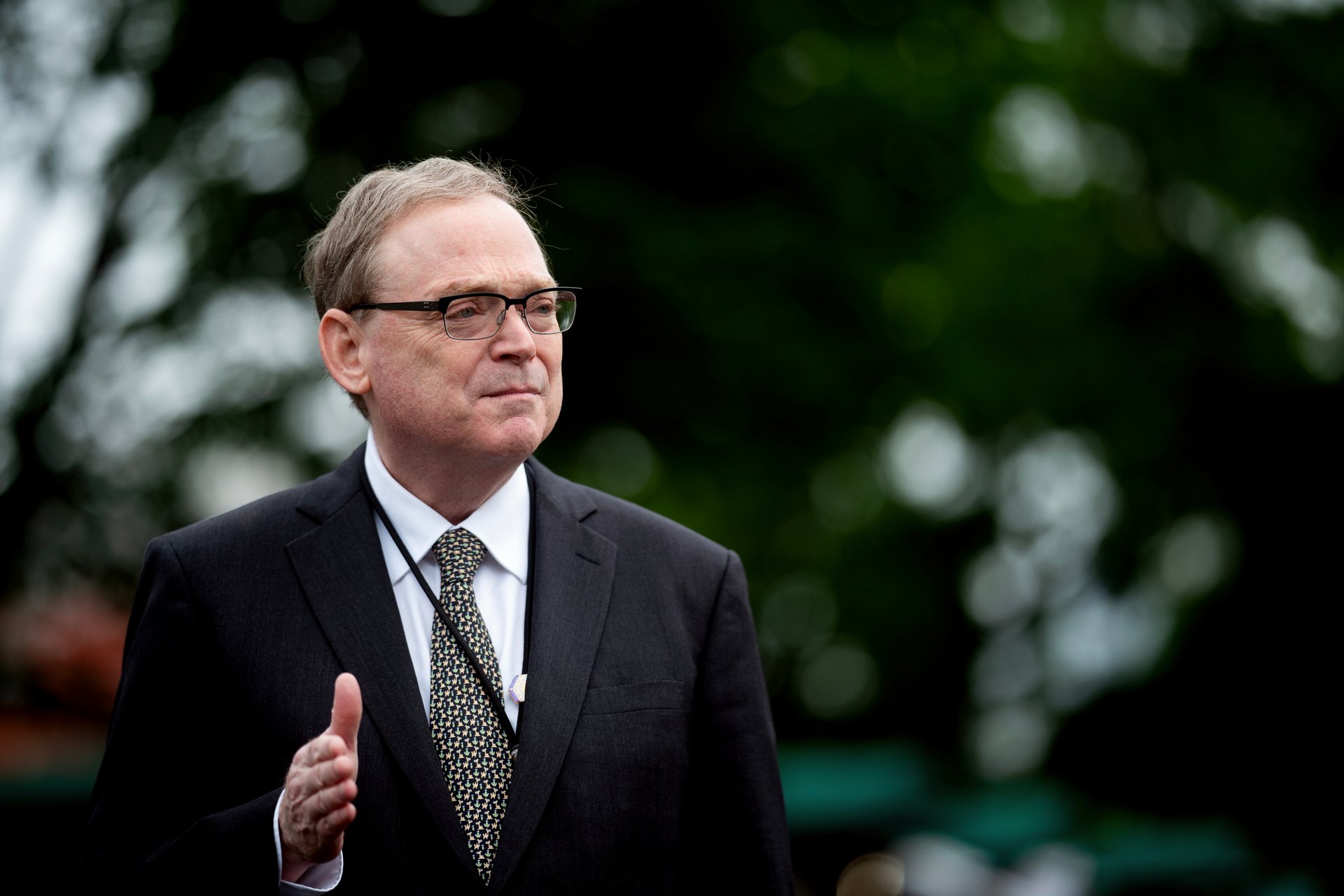
Kevin Hassett, director of the National Economic Council, speaks to members of the media following a television interview outside the White House in Washington, DC, US, on Tuesday, May 27, 2025 (Stefani Reynolds/Bloomberg via Getty Images)
President Donald Trump's top economist suggested that a group of economists that contradicted the White House on tariffs should face disciplinary action.
In a CNBC interview on Wednesday morning, White House National Economic Council Director Kevin Hassett attacked the researchers behind the paper.
Related Content
"The paper is an embarrassment. It's, I think, the worst paper I've ever seen in the history of the Fed system," Hassett said. "The people associated with this paper should presumably be disciplined."
He further assailed the New York Fed research as "highly partisan" for not focusing enough on the spillover effects of the tariffs. Hassett contended that tariffs will help reshore U.S. jobs that are now overseas, drive up demand and eventually lead to higher wages for U.S. workers.
The U.S. manufacturing sector, though, has steadily shed jobs since April last year, in large part due to uncertainty around the tariffs.
Hassett's remarks put a spotlight on the Trump administration's zeal to pummel researchers who publish findings that contradict their economic messaging — and stirred unease among economists. Claudia Sahm, a former Federal Reserve economist who is now chief economist at New Century Advisors, called Hassett's comments "deeply disturbing" in a social media post.
It's not the first time the White House has criticized these type of findings. Last year, Trump suggested that Goldman Sachs $GS CEO David Solomon should "get himself a new economist" after the firm published a note indicating tariff costs were likely to get passed onto consumers.
The White House did not immediately respond to a request for comment. The New York Fed declined to comment.
Most economists typically agree that tariffs on imports amount to a tax that is offloaded onto consumers. The New York Fed study aligns with that substantial body of research.
"U.S. firms and consumers continue to bear the bulk of the economic burden of the high tariffs imposed in 2025," the New York Fed researchers said in the paper published last week. They found 94% of the tariffs are being paid by U.S. importers and consumers.
Other independent analyses supports those findings. The nonpartisan Congressional Budget Office recently published an economic forecast that estimated U.S. businesses absorb 30% of the cost of tariffs by reducing their profit margins. The rest, or 70%, are passed onto consumers as higher prices.