
RFK Jr. takes aim at court that protects vaccine makers from lawsuits
Opening vaccine makers up to traditional lawsuits could drive them away from the U.S. market
Andrew Harnik / GettyImages/
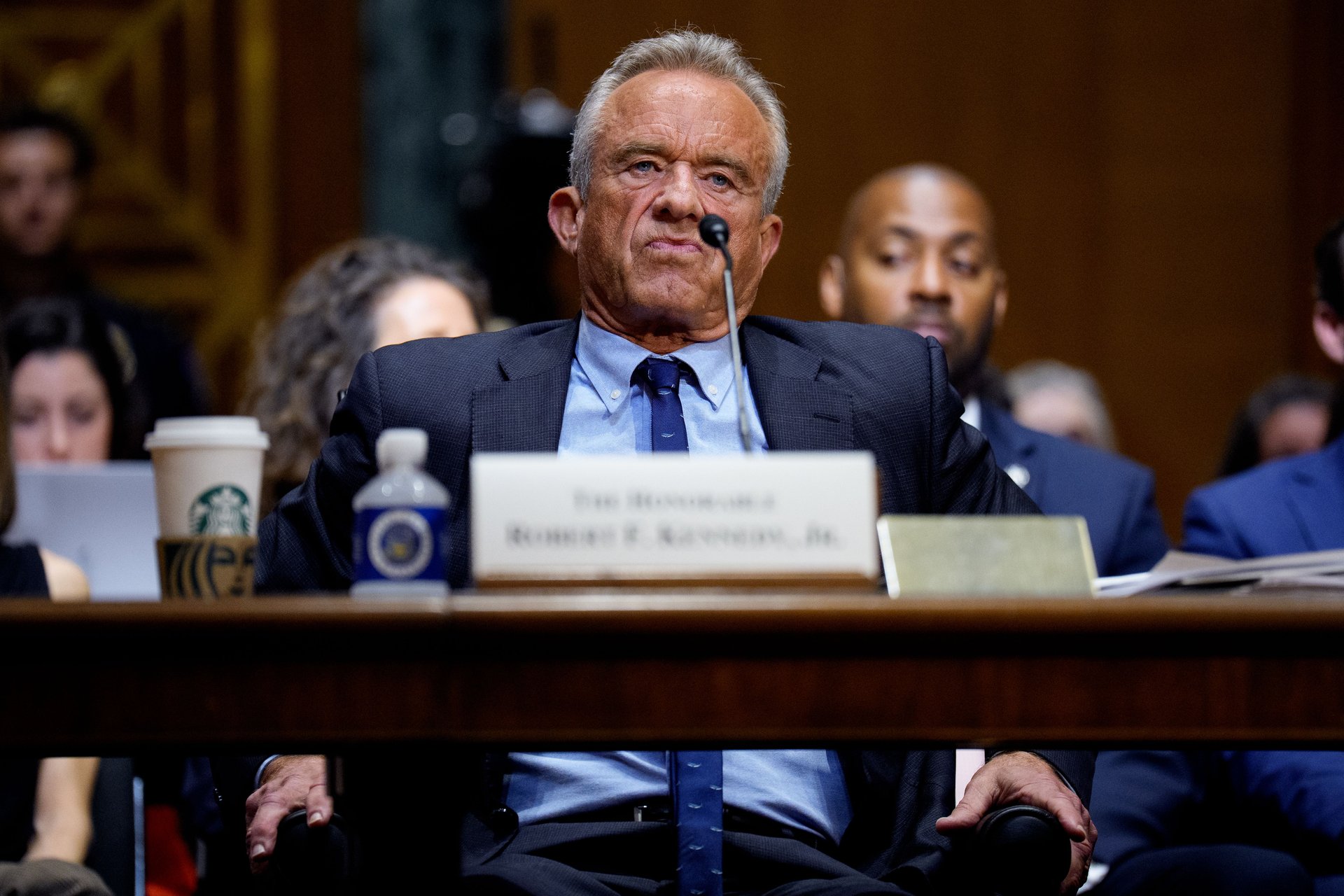
Health and Human Services Secretary Robert F. Kennedy Jr. has made no secret of his disdain for vaccines. Since taking office in February, he's taken several actions that have created turmoil and uncertainty for vaccine manufacturers. He’s not done.
Even though there is overwhelming evidence that childhood vaccines are safe and effective, Kennedy is determined to use his new position as head of HHS to act on his belief that they are not. Kennedy has long been a critic of the HHS vaccine court that determines claims of harm to children from vaccines and then compensates them from a trust fund. Now he wants to use his new position to try and overhaul this system.
Related Content
In a lengthy social media post this summer, Kennedy wrote that the vaccine court program “has devolved into a morass of inefficiency, favoritism, and outright corruption as government lawyers and the Special Masters who serve as Vaccine Court judges prioritize the solvency of the HHS Trust Fund, over their duty to compensate victims.”
He reiterated his charges in interviews with conservative podcasters Tucker Carlson and Charlie Kirk and said he has assigned a team to overhaul the vaccine court, working in conjunction with U.S. Attorney General Pam Bondi.
Any significant changes to the program would likely require Congressional action, but legal experts say he may be able make some changes in the margins. “His rhetoric is dangerous and concerning and unfortunate,” said Richard Hughes, an attorney in the Health Care & Life Sciences practice of Epstein Becker Green, which represents vaccine makers. “It certainly creates some concern in the industry.”
The Vaccine Injury Compensation Program (VICP), created by Congress in 1986, created an alternative to the traditional legal system in order to protect pharmaceutical companies from massive lawsuits on behalf of children who may have been harmed by vaccines. The law was passed after a surge in tort lawsuits in the 1980s drove vaccine makers from the market. In 1980 there were 18 vaccine manufacturers in the United States; 10 years later there were four.
Under the VICP, instead of suing in a traditional court, patients can seek compensation from a special trust fund administered by HHS, built up through a 75-cent tax on each dose of covered vaccine. Each case is decided by one of eight special masters; they can make awards even when there is no clear proof that a vaccine has caused harm, with awards for damages from deaths capped at $250,000. There is no cap on awards for lifetime care.
At first meant only to cover childhood vaccines, VCIP was later expanded to cover pregnant women. Vaccines that are just for adults, such as the shingles vaccine, are not covered, and COVID-19 vaccine claims are heard under the Countermeasures Injury Compensation Program, set up to address public health emergencies.
As of 2023, approximately 38% of the petitions bought to the Vaccine Court were decided in favor of the patient, with some $4.6 billion awarded in compensation. The law creating VCIP was championed by Kennedy’s uncle, Senator Ted Kennedy, who said at the time, “when ... children are the victims of an appropriate and rational national policy, a compassionate government will assist them in their hour of need.”
His nephew has a very different view. RFK Jr has long claimed that, by removing the threat of large tort awards in court, the VCIP removes any incentive for the pharmaceutical industry to make safe vaccines. He has accused the industry of inflicting “unnecessary and risky vaccines” on children for profits.
Kennedy is already familiar with how vaccine cases are tried in traditional courts. Since 2018, he has been part of a number of lawsuits against Merck $MRK over claims of harm from Gardasil, a vaccine administered to adolescent girls that protects against the virus that can cause cervical cancer. Merck has never lost a Gardasil case.
There is general agreement that the VCIP needs to be updated. The law supplies only eight special masters to hear all cases, and currently there are more than 3,600 open cases before them. In 2011, just 381 cases were filed. Also, the damages cap of $250,000, set 40 years ago, has never been adjusted for inflation.
There aren’t a lot of changes that Kennedy can make to the Vaccine Court without an act of Congress, and given the deeply divided legislature that is unlikely to happen, experts said. However, he could try and add to the table of injuries eligible for compensation. Senator Elizabeth Warren (D-MA) raised just this concern during Kennedy’s confirmation hearing. “As Secretary of HHS,” she said, “you could make more injuries eligible for compensation even if there is no causal evidence. … You could change which claims are compensated in the Vaccine Injury Compensation Program.
Adding autism, for example, even though there is no evidence tying the condition to vaccines, would likely lead to a flood of compensatory claims that could overwhelm the vaccine court and even bankrupt the fund. Kennedy is determined to find such a link. One of his first acts as secretary was to launch an effort to create a database on autism that could help in finding some link to childhood vaccines.
But making such a change requires a long administrative review and public comment period, noted Anna Kirkland, a professor at the University of Michigan and author of a book on the vaccine court. “Adding to the injuries list with no medical evidence may be within his powers, but it would still be difficult. There would be a lot of pushback.” And if he failed to follow legally required procedures he would surely be sued, she said.
Kennedy could also push his newly reconstituted Advisory Committee on Immunization Practices, which he packed with vaccine skeptics and outright denialists, to withdraw recommendations for certain vaccines. That would remove them from eligibility for vaccine court and lawsuits against manufacturers could then go straight to regular courts — exactly what the VCIP was created to avoid.
The next ACIP meeting is on September 18-19 and on the agenda are discussions about COVID-19 vaccines; hepatitis B vaccines; the measles, mumps, rubella, varicella (MMRV) vaccine; and respiratory syncytial virus (RSV) vaccine. The chair of ACIP, Martin Kulldorff, has said it may be time to reconsider whether all infants need to receive a hepatitis B shot.
But there would also surely be pushback to removal of any vaccines currently recommended, Kirkland said. “There are a lot of constituencies who want the compensation system to continue to exist,” she noted. “Pharmaceutical companies, the medical world, the attorneys that bring these cases to the vaccine court, none of them want the whole thing destroyed.”