
The 4 industries worst hit by tariffs so far
Getty Images / CFOTO
The Trump administration's tariffs on U.S. imports are rippling through supply chains. However, some industries are disproportionately worse-off, depending on how exposed they are to imports. Here are the four sectors paying the highest price thus far.
Suggested Reading
Consumer Goods (Importers and Retailers)
Consumer goods companies have been worst affected.
Related Content
A Reuters news agency tracker - which looks at how companies across the world are responding to Trump’s tariffs - found that importers of consumer goods were the worst hit industry during the first quarter of the year. It found that 42 companies reported price hikes, 39 withdrew or cut guidance and 18 took a financial hit. Of the U.S. companies tracked, Reuters found that food and drink conglomerate PepsiCo, and shoemakers Skechers and Crocs, were forced to make the most-tariff related actions.
Not only are consumer goods companies heavily reliant on imports, but they also run with leaner margins, meaning they're more likely to pass on price hikes to consumers. Across the board, consumer prices are expected to rise by 1.8% in the short-run (defined as the next two years), according to an August analysis from The Budget Lab (TBL) at Yale University. This is the equivalent of an average per household income loss of $2,400. Apparel and footwear are set to see the steepest hikes compared to any other commodity, according to the TBL's report. Short-term prices are expected to jump approximately 39% for leather products like shoes and handbags, 37% for apparel, and 21% for textiles more broadly.
Automakers / Autoparts
Motor vehicle prices are expected to rise 12.4% in the short-run, the equivalent of an additional $6,000 to the price of an average 2024 new car, according to TBL.
Reuters’ tracker identified 18 companies in the “Automotive & Transportation” sector that withdrew or cut their guidance in the first quarter, and 14 that took a financial hit. The U.S. companies in this sector that took the most tariff-related actions (such as making supply chain changes or issuing profit margin warnings) were Tesla and General Motors.
The auto industry has been hit hard ever since President Donald Trump issued a 25% tariff on imports of vehicles and auto parts back in March (although some countries have also been able to strike deals to reduce those levies). However that's only part of the story. The industry is also affected by a 50% tariff on steel and aluminum, which affects various auto parts, like exhaust systems, the electrical steel needed for electric vehicles, and components for buses. The Commerce Department also said on September 16 that it will consider requests from industry to impose additional tariffs on imported auto parts in the coming weeks based on "national security grounds."
Agriculture
U.S. farmers are being affected both by tariffs on the inputs they need, and in some cases, by retaliation from trading partners.
For example, the aforementioned steel and aluminum duties make machinery, bins, sheds, and equipment pricier. Farmers are also heavily dependent on crop-protection chemicals imported from China and India, such as 2,4-Dichlorophenoxyacetic Acid (2,4-D).
On top of this, retaliatory tariffs have landed squarely on U.S. farm goods. Trading partners tend to pick these exports for retaliation because they’re fairly substitutable without big consumer disruption.
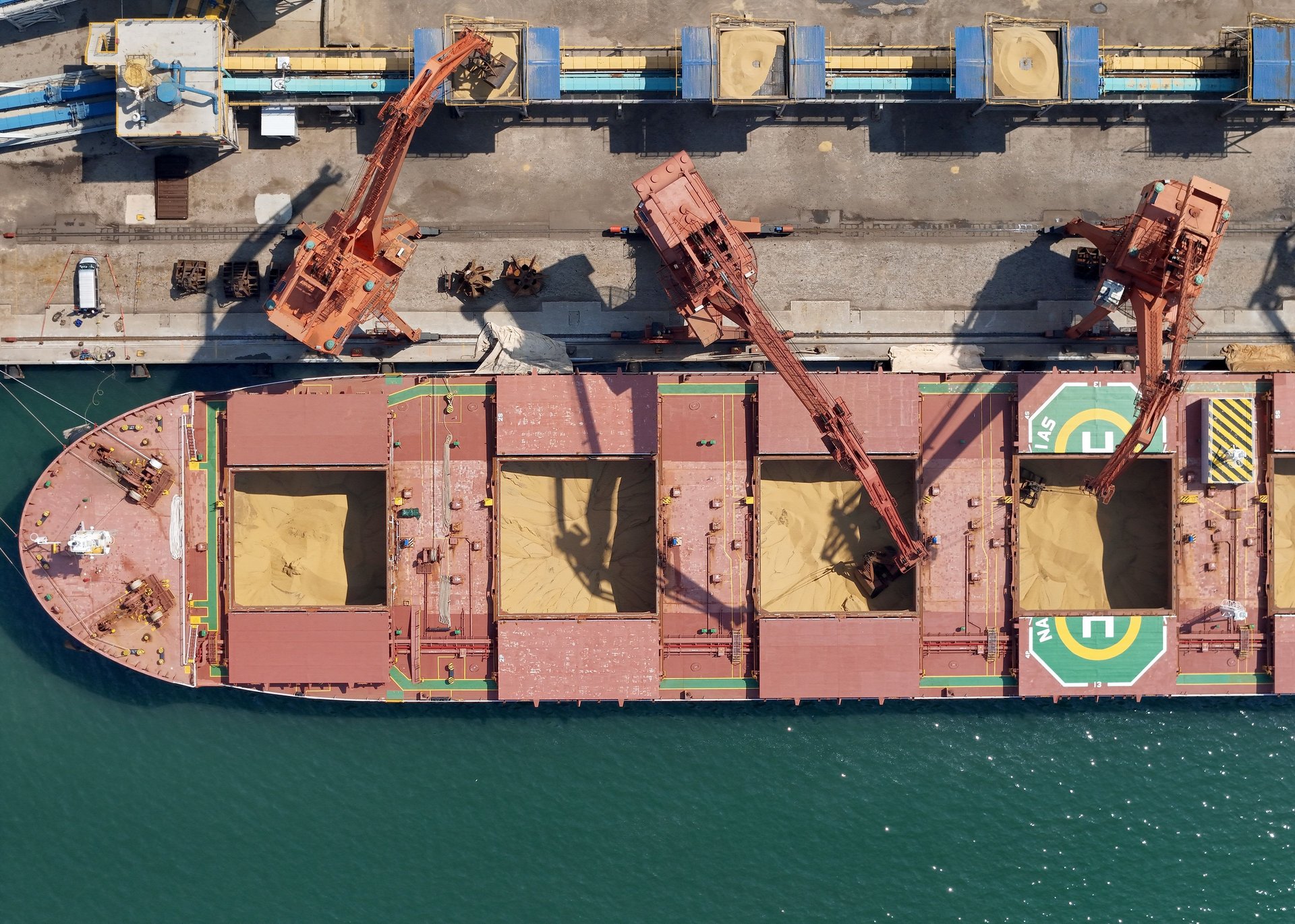
Take the case of China. In, Beijing hit about $21 billion of U.S. farm exports with 10–15% tariffs. As a result, U.S. farm exports to China fell 53% year-over-year during the first half of the year. Looking ahead, Chinese importers have booked around 7.4 million metric tons of South American soybeans for October shipment, covering 95% of its projected demand for the month, Reuters reports. This amounts to billions of dollars in losses for U.S. farmers, who previously accounted for the bulk of China's soybean supply.
This reduced export demand, compounded by the rising cost of farming equipment and chemicals, explains why food prices are expected to rise 3.2% in the short-run, according to TBL, with fresh produce 7% more expensive.
Steel & Aluminum Using Industries
The White House doubled steel and aluminum import tariffs to 50% on June 4, 2025. Metal prices are expected to soar 41% in the short-run, according to TBL. This means a large range of items become more expensive to produce, from cars and air conditioning units, to beverage cans and drilling pipes. But some of the most metal-intensive industries include aerospace (aircraft and spacecraft makers), oilfield drilling, and commercial kitchen equipment.
The administration has introduced a number of measures to amplify the shock of this 50% tariff. For instance, it has prevented importers from seeking any new product-specific exclusions. It has also tightened “melted and poured” rules, so that for a steel product to be considered a product of the U.S., Mexico, or Canada, and thus avoid the tariff, it must have been originally melted and then poured into a solid form (such as a slab or billet) within one of these three countries. Lastly, in August, the Commerce Department also expanded the coverage of the tariff to more downstream parts (like bulldozer blades and vehicle components) when it announced the addition of 407 product categories to the list of “derivative” products subject to the levy.