
The Trump policies undermining his 'Build America' push
Builders and manufacturers are wary about their future spending, while automakers are increasingly stung after making big bets on electric vehicles
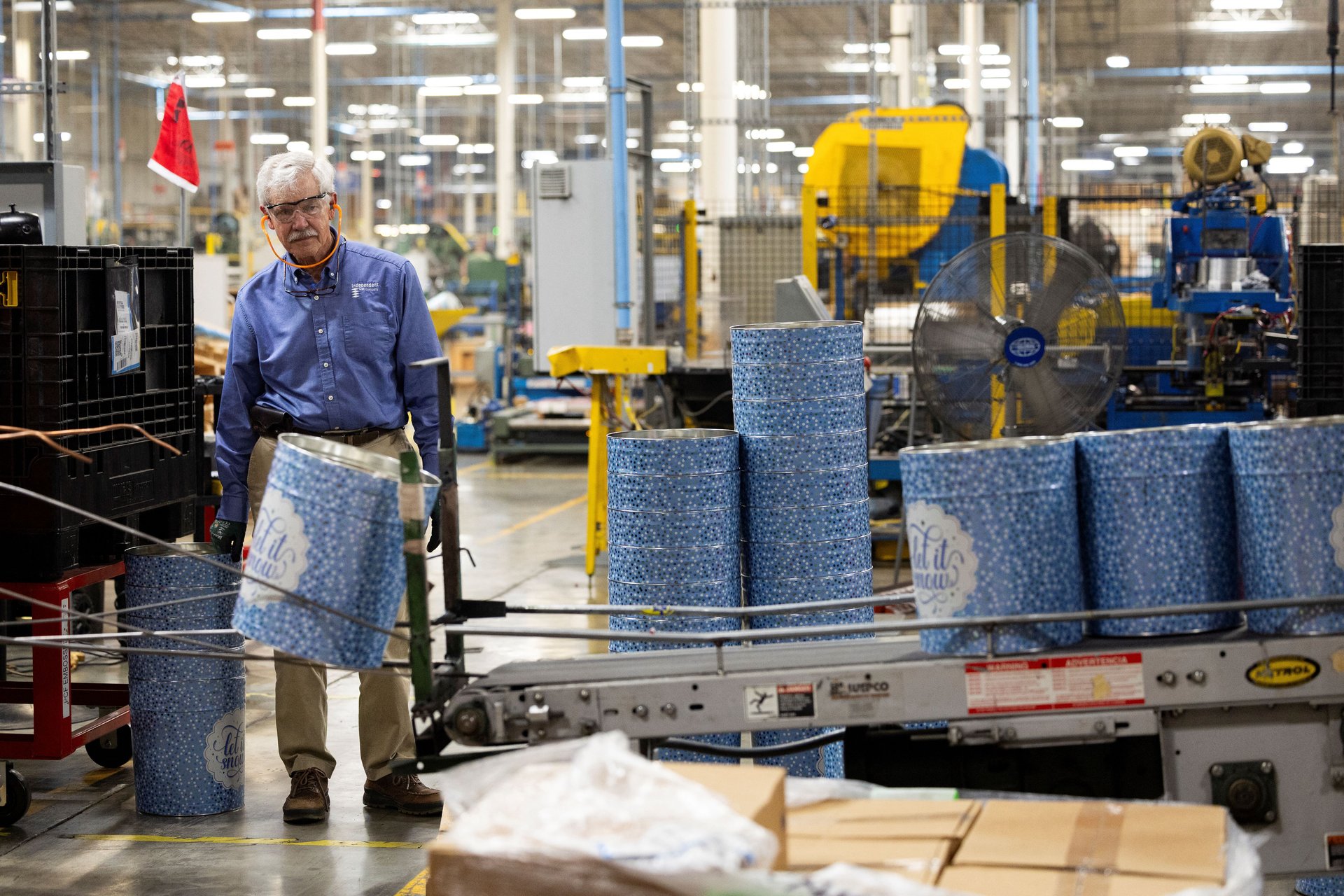
Many manufacturers are grappling with evolving tariff environment under President Trump. (Ryan Collerd/AFP via Getty Images)
President Donald Trump wants to build more of everything in America. Homes, factories, semiconductors.
Yet his erratic trade wars are helping undermine that gambit. Builders and manufacturers are wary about their future spending. Automakers are increasingly stung after making big bets on electric vehicles, a gamble that led to losses instead of hefty profits in the short term.
Here's a look at three areas where the Trump administration's "Build America" push has been undermined by its own policies.
Fewer new homes
Trump has made expanding homeownership a major plank of his domestic agenda as home prices render them out of reach for many American families.
He turned executive power into a blunt-force instrument to lower prices with mixed results, including pushing mortgage giants Fannie Mae and Freddie Mac to purchase $200 billion in mortgage-backed securities.
"America will not become a nation of renters," he said at his World Economic Forum speech last month in Davos, Switzerland.
Housing prices have soared in the past decade, denting the ability of families to purchase their first homes. The national median single-family home price stands at $414,900, according to the National Association of Realtors.
Yet the president's signature double-digit tariffs have hit critical materials for homebuilding like copper, steel, and lumber. He imposed a 50% tariff on copper last year. Canadian lumber duties have reached 35% as well. Steel tariffs stand at 50%.
Those factors combine to swell the cost of building new homes and slow down their entry into the market, analysts say. The left-leaning Center for American Progress projected tariff-induced construction costs will prevent 450,000 new homes from getting added onto the housing market in the next five years.
U.S. manufacturing in retreat
In Trump's telling, American manufacturing was supposed to enter a new golden age once he stepped into the Oval Office. That hasn't been the case so far in his second term.
During Trump's first term, U.S. manufacturing employment climbed up until the pandemic, in part due to the accelerated investment from the 2017 tax cuts and a global economy that hummed along.
But he kicked off his second administration with a destabilizing trade war with on-again, off-again tariffs. That uncertainty spiraled into a slump in manufacturing activity.
Trump argued that the tariffs would compel foreign governments to agree to more generous trade accords favoring U.S. workers and rev up domestic production of high-tech products like semiconductors.
Yet those tariffs have yielded uncertainty in the economy that's prompted companies to shelve plans to deploy more capital. In this case, workers have been laid off. Manufacturers cut 72,000 jobs in the eight months following the president's "Liberation Day" tariffs. About 8,000 manufacturing jobs were eliminated in December alone, according to government data.
The big EV pullback
The Biden administration enacted major subsidies to accelerate adoption of zero-emissions electric vehicles — chiefly, a $7,500 tax credit for Americans to buy EVs. U.S. automakers responded by speeding up production of the battery-powered vehicles, banking on robust consumer demand. They also eyed hammering out a network of battery factories in the U.S.
The Trump administration scrapped the federal aid last year, aligning with their promotion of fossil fuels over renewable energy. Automakers who made big bets on EVs are already reporting a hit to earnings.
Take General Motors $GM. The iconic auto company reported a $6 billion loss in January as it turns away from electric cars. The prior month, Ford $F said it was taking a roughly $20 billion hit to earnings and shifting gears to maintain robust production of gas-powered and diesel vehicles.
Yet automakers want to salvage their bottom line and repurpose those same EV batteries for other uses: data centers for AI and energy utilities. Whether it pays off depends on how fast the auto companies can repurpose factories and production lines.