
Everything we know about 'Trump accounts' for kids — and 1 critical question still unanswered
The investment accounts will start rolling out mid next year, with some employers pledging to chip in money for their workers' kids
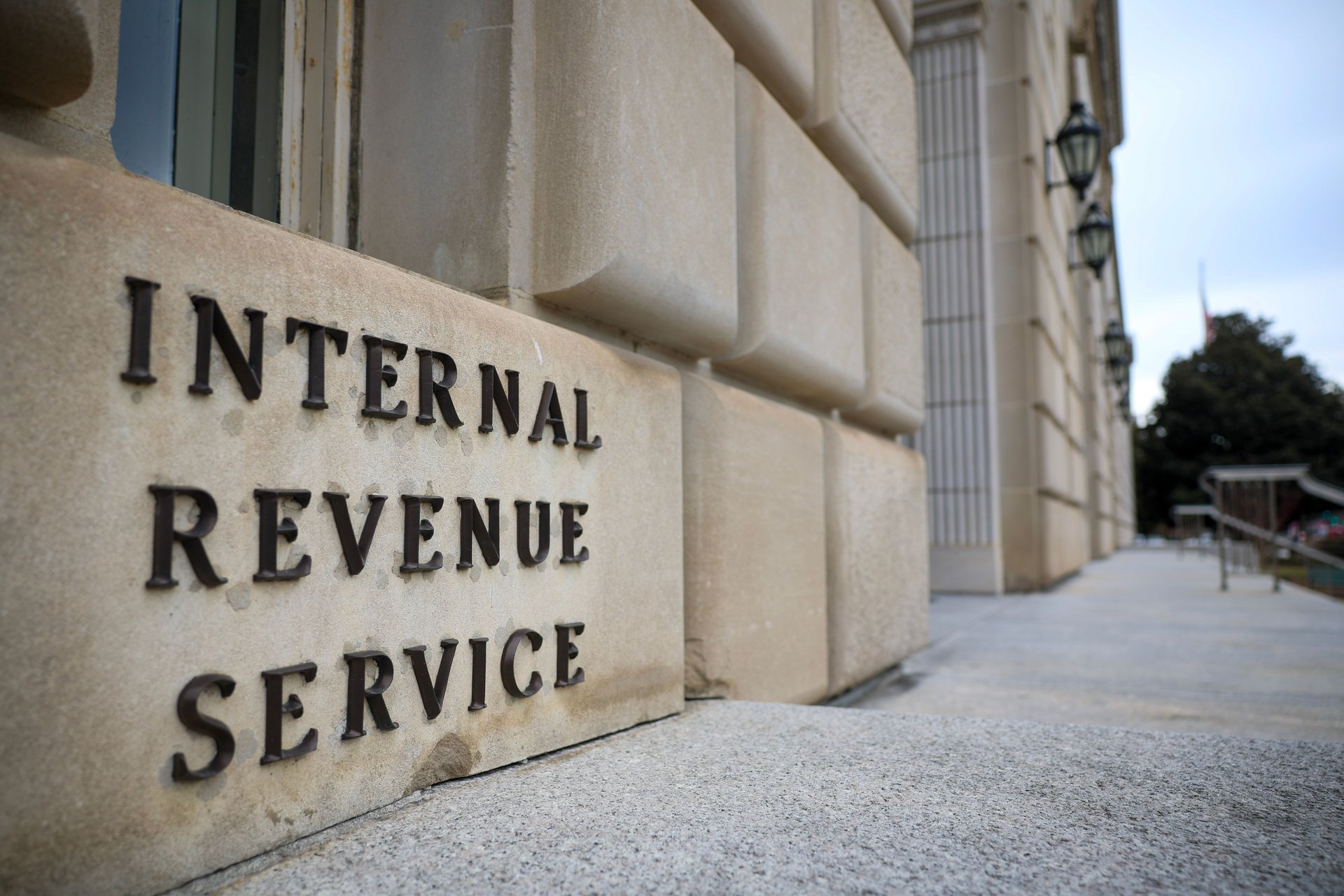
The Internal Revenue Service (IRS) Building is seen on February 20, 2025 in Washington, DC. (Tasos Katopodis/Getty Images)
The Trump administration is starting to fill in the blanks on the so-called "Trump accounts" designed to provide a financial leg up for kids.
The Republican tax-and-spending megabill, which became law in July, included a provision to establish tax-deferred investment accounts with $1,000 for children born in the United States.
The accounts drew new attention after CEO Michael Dell of Dell Technologies alongside his wife Susan donated $6.25 billion for the initiative that will seed 25 million accounts with $250 a piece.
The Treasury Department and Internal Revenue Service are now issuing guidelines on how to access the accounts. Here's everything we know so far, and the one critical question that remains unanswered.
Who qualifies for a Trump account?
Children born after Dec. 31, 2024 and before Jan. 1, 2029 will qualify for an account, and the program's duration aligns with Trump's second term in office. Kids must have a Social Security number.
A parent or legal guardian will be responsible for setting up and managing the account on behalf of their children until they reach age 18.
How do I set up an account?
The Treasury has said families should use IRS Form 4547 to open an account. It's a new form that isn't finalized yet, according to the IRS. Starting in May 2026, Treasury is expected to send information to the account holder to begin the authentication process towards the federal $1,000 deposit.
What rules are there around withdrawing the money?
Beneficiaries can withdraw the cash starting at age 18 under certain circumstances such as paying for college. They would gain full control over the money at age 30, and parents could deposit up to $5,000 annually. It can only be invested in low-cost U.S. stock index funds.
The account functions similarly to a traditional individual retirement account, better known as an IRA.
How does my child get the extra $250 from the Dells?
There are strings attached to their donation, the largest one-time example of philanthropic giving in U.S. history.
The cash will flow to kids born between 2016 and 2024. They must reside in a ZIP code with median incomes below $150,000. No ZIP code tool is currently available to check for eligibility.
Which bank or brokerage is handling the accounts?
We don't know yet. This is probably the biggest question given the novelty of the program.
In its initial announcement, the White House didn't specify which private sector institution it intended to partner with to establish and handle the accounts. The Treasury Department did not immediately respond to a request for comment.
Are companies participating?
A few firms have stated their intention to provide money on behalf of their employees. They'll be limited to $2,500 per year, though the amount is indexed to inflation.
Among those are the chipmaking giant Nvidia, investment firm Goldman Sachs, and the ride-share company Uber. However, employers can't chip in any money until July 4 next year.
It's very possible that additional companies will pitch in and match the contributions of their workers. Republican Sen. Ted Cruz of Texas and Cory Booker of New Jersey sent a letter to Fortune 1000 CEOs encouraging their companies to contribute "at a level aligned with your mission and capacity."
Are there alternative tax-advantaged accounts for kids?
Yes, plenty!
Adam Michel, director of tax policy studies at the Cato Institute, has observed that the Trump accounts initiative represents the 12th tax-advantaged savings account within the U.S. tax code.
"The existing 529 education saving plan provides larger tax advantages by permitting after-tax contributions, with no taxes at withdrawal," Michel wrote in a Substack post. "It is also more flexible, allowing more types of education expenses and up to $35,000 in rollovers to a Roth IRA."