
Cardboard box demand is flashing a U.S. recession signal
International Paper and other major box makers are cutting capacity, signaling a potential slowdown for the broader U.S. economy
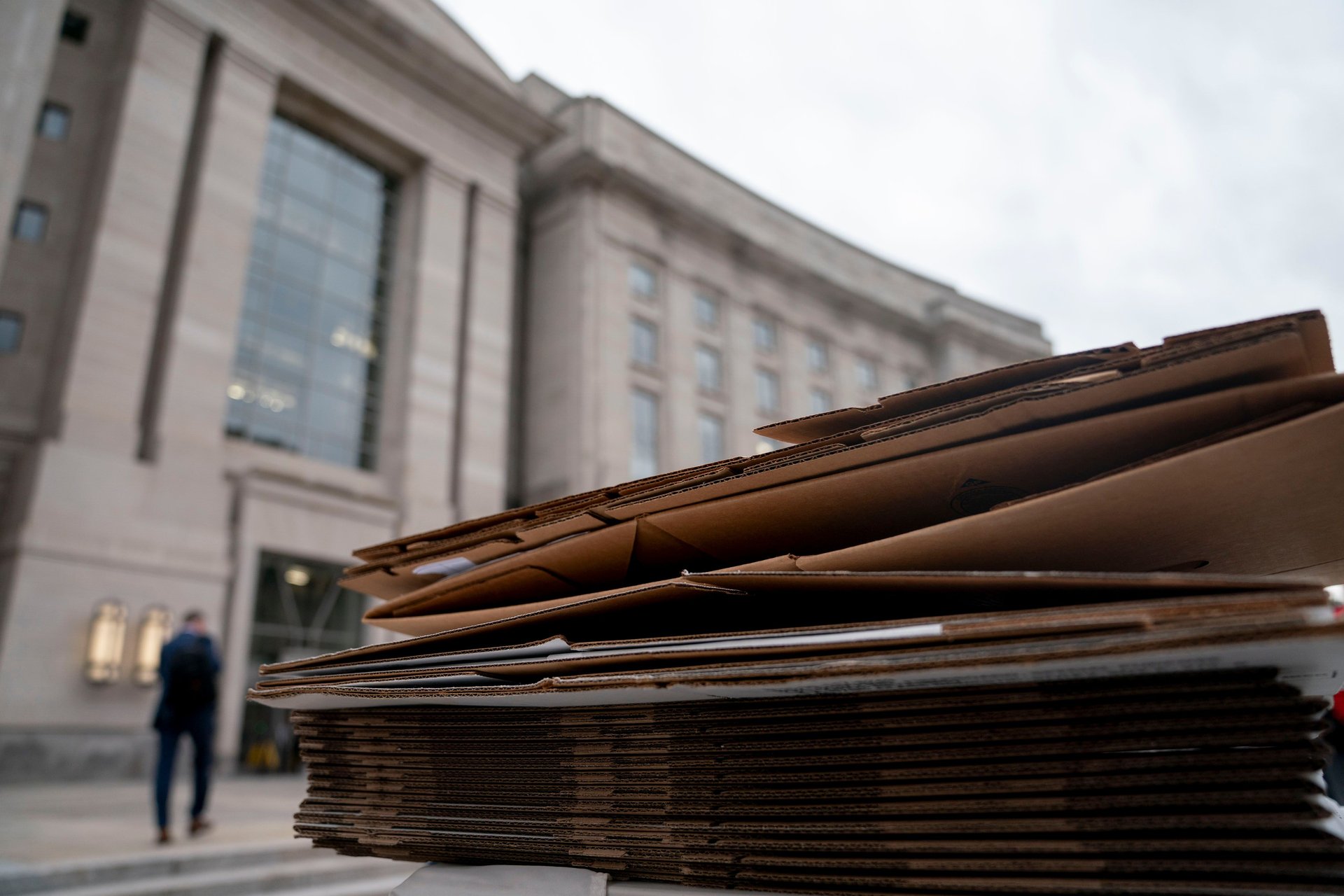
Stefani Reynolds/Bloomberg via Getty Images
The biggest cardboard box maker in America finished shutting down two mills in Georgia a couple weeks ago, wiping out more than a thousand jobs. On its own, the decision by International Paper might look like cost cutting in a tired industrial sector. But together with other recent pullbacks across the industry, it could be an economic warning light.
Economists have long looked to the cardboard box sector as a proxy for real-world demand. Everything from refrigerators to frozen pizzas travel in them. They pile up on porches, fill warehouse loading bays, and line recycling bins. When manufacturing is increasing and companies expect to sell more stuff, they order more boxes. When demand is weakening those orders drop off, and it can be an early sign that the economy is faltering.
Related Content
Now, the picture is getting increasingly concerning. Cardboard box companies are laying off employees and shutting down plants. International Paper’s sites in Georgia were the latest in a string of factory closures this year across the sector that meant that the U.S. has shed about 9% of its containerboard production capacity in about eight months, and about twice as much as in the 2009 recession.
International Paper said U.S. shipments of boxes fell about 5% year-on-year in the second quarter – its fourth consecutive quarterly decline – while Ireland’s Smurfit Westrock saw a 4.5% slide in North American corrugated cardboard volumes, the biggest drop across all of the regions it operates in. Data from the Fibre Box Association suggests that volumes of cardboard packaging sold to retailers fell to the lowest second-quarter reading since 2015.
Trade tariffs are, of course, also part of the equation. Cardboard boxes carry U.S. products abroad, with analysts at Barclays estimating that about 10% to 15% of American containerboard capacity is tied to exports. Trade disruptions related to tariffs are expected to slow these exports and potentially shrink them in 2026, the analysts wrote in a recent note.
“If we’re to assume that cardboard boxes are a leading indicator, it could be a bad sign of what’s ahead,” wrote Jadrian Wooten, an economist at Virginia Tech, in a recent blog. “If they’re cutting back on capacity, it likely comes as a response to fewer orders. That would suggest weaker demand in the broader economy. If shipments keep falling, other indicators like GDP or unemployment may eventually catch up.”
The slowdown in box production is not just related to falling demand for goods. Packaging has gotten lighter as companies try to be less wasteful, and the industry has consolidated in the last two years. Smurfit Kappa, Europe’s largest boxmaker, did a $20 billion merger with U.S.-based WestRock in 2023, while International Paper bought Britain’s DS Smith for $9.9 billion in 2025.
Nonetheless, those moves mean that most of America’s box-making capacity is now controlled by just three players. Analysts told The Wall Street Journal that this concentration gives producers more room to shut mills while keeping prices — which rose during a brief, pandemic-fueled cardboard box boom — steady.
As recession indicators go, cardboard has been fairly reliable in the past. Jeffrey Kleintop, chief global investment strategist at Charles Schwab $SCHW, told MarketWatch last year: “During the last three or four recessions over the last 30 years, demand for cardboard boxes fell by 10 to 15%.”
Perhaps that is why Alan Greenspan, chair of the Federal Reserve from 1987 to 2006, is said to have tracked cardboard box demand as a measure of real-time activity. They may not be perfect as an economic gauge, but boxes are tangible, real things that ebb and flow with consumer behavior. When they stop moving, it means something has shifted.